If you want a Nashville neighborhood with real creative energy, Wedgewood-Houston is hard to ignore. Just a few blocks south of Downtown, this area blends warehouse history, growing residential options, and a steady rhythm of galleries, restaurants, and new development. If you are wondering whether WeHo fits your lifestyle, this guide will help you understand the day-to-day feel, housing mix, and what to expect as the neighborhood continues to evolve. Let’s dive in.
Wedgewood-Houston at a Glance
Wedgewood-Houston, often called WeHo, is widely recognized as one of Nashville’s creative hubs. Metro planning documents describe the broader Wedgewood-Houston and Chestnut Hill area as a South Nashville district with older housing stock, newer homes, industrial land, public housing, improving transit service, and a growing arts-district identity.
That mix is a big part of what makes the neighborhood stand out. You are not moving into a place that feels frozen in time. You are moving into an area where industrial history, art spaces, and new housing all exist side by side.
The Neighborhood Feel
Wedgewood-Houston tends to feel creative, active, and a little unfinished in the best way. Its industrial past still shapes the streetscape, with older manufacturing buildings and warehouse spaces helping give the neighborhood its gritty, design-forward personality.
Over time, many of those spaces have attracted artists, galleries, and local makers. That gives WeHo a lived-in identity that feels more organic than overly polished. If you like neighborhoods with personality and visible change, that is often part of the appeal.
A Creative Hub With Real Momentum
One of the clearest signs of the neighborhood’s identity is the local arts scene. The WeHo Art Crawl takes place on the first Saturday of every month starting at 6 p.m., with more than a dozen venues participating.
The area includes galleries and creative spaces such as David Lusk Gallery, Zeitgeist Gallery, and Fort Houston. Resident-led groups like SNAP and WEHO Social also reflect an active local community, which adds to the sense that Wedgewood-Houston is more than a collection of new projects.
Dining Is Part of Daily Life
Food and drink are a major part of the neighborhood lifestyle. Wedgewood-Houston offers a mix of casual spots and destination restaurants, which makes it easy to build a routine close to home.
Examples in the area include Bastion, Dicey’s Pizza and Tavern, Jackalope’s brewery and taproom, and May’s. Recent openings and announcements such as Aba, Sushi Row, Sally’s Stay Awhile, and Moto Moda continue to expand the neighborhood’s dining scene.
What Living Here Feels Like Day to Day
Living in Wedgewood-Houston often means being close to things happening now. You may find yourself grabbing coffee or lunch nearby, meeting friends for dinner, or making the monthly art crawl part of your routine.
At the same time, this is still a neighborhood in transition. Construction, redevelopment, and infill are part of the current reality. For many buyers, that change is part of the draw. For others, it is something to consider carefully before choosing the area.
Best Fit for Certain Buyers
Wedgewood-Houston often appeals to buyers who want an urban, design-conscious lifestyle rather than a more traditional suburban setup. It can be a strong match if you value close-in access to Downtown, enjoy local dining and arts, and do not mind living in a neighborhood that is still actively evolving.
That may include young professionals, relocators, downsizers, and buyers who like mixed-use environments. It can also appeal to people who are open to newer housing types such as townhomes, loft-style residences, and apartment-style developments.
Housing in Wedgewood-Houston
Housing here is mixed, and that is one of the defining features of the neighborhood. Metro planning documents describe a combination of older housing stock, newer homes, industrial land, and a policy framework that supports more housing diversity and contextual infill.
In simple terms, you should expect variety. Some homes reflect the area’s earlier development patterns, while others are clearly part of newer redevelopment efforts.
What Types of Homes You’ll Find
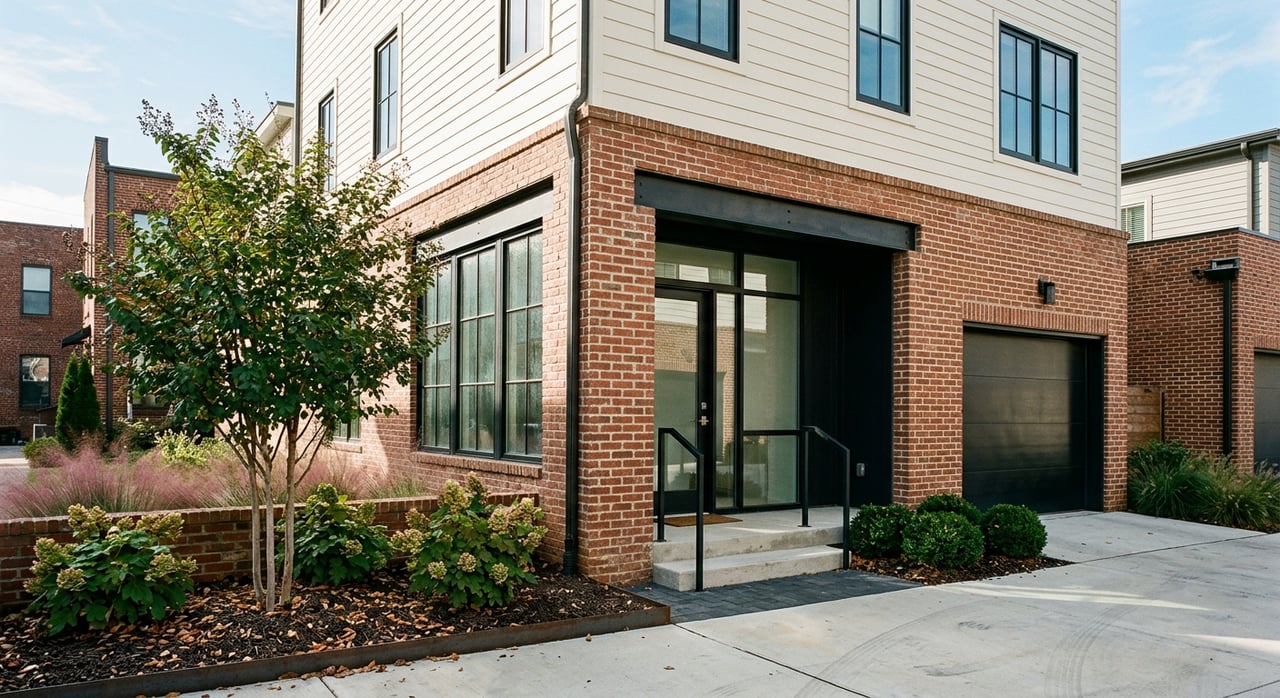
Buyers in Wedgewood-Houston may come across adaptive-reuse residences, boutique townhome projects, newer apartment-style communities, and larger mixed-use developments. That range creates more options, but it also means the streetscape can vary block by block.
Recent examples help show that variety. The Byrum repurposes 173 shipping containers into studio, one-bedroom, and two-bedroom residences. The Fairview is a boutique townhome project, and Wedgewood Village adds residential units alongside retail and dining in a larger mixed-use setting.
A Neighborhood Still Changing
Wedgewood-Houston is not standing still. Metro’s planning work and urban design overlay were created to help balance growth, affordability, displacement concerns, and neighborhood character while allowing more contextual infill and a broader range of housing types.
That means buyers should expect continued redevelopment and change over time. If you are considering a move here, it helps to view the neighborhood not only for what it is today, but also for where it is headed.
Getting Around WeHo
One of Wedgewood-Houston’s biggest practical advantages is location. The neighborhood sits just a few blocks south of Downtown Nashville, which can make commuting and access to central city amenities more convenient.
Still, daily transportation here is best described as mixed. Driving, rideshare, and transit are all part of the picture, and bike access is improving, but the area is not uniformly easy to navigate without a car.
Transit and Street Access
WeGo Public Transit serves the area with nearby routes including Route 8, Route 52, and Route 77. Route 8 includes a stop at 8th Ave S and Wedgewood Ave, while Route 77 includes a stop at Wedgewood Ave and 21st Ave S.
Routes 52 and 77 also serve game-day travel to GEODIS Park. That adds another layer of convenience if you enjoy being near major events and stadium activity.
Walkability and Bike Access
Some parts of Wedgewood-Houston feel compact and close to key destinations, but it is best to think of the neighborhood as urban and improving rather than uniformly walkable. Metro Transportation notes that South Nashville can still be difficult to bike because interstates and major roads cut through the area.
There are planned bikeway connections intended to improve travel between Wedgewood-Houston, Downtown, and neighborhoods to the west through Edgehill Avenue. So if you are thinking long term, the mobility story here is improving, even if it is still somewhat car-oriented today.
Why Buyers Keep Watching Wedgewood-Houston
Wedgewood-Houston gets attention because it offers something many buyers want but struggle to find: a close-in Nashville neighborhood with a distinct identity. It is not trying to feel generic. The warehouse conversions, arts activity, dining scene, and new residential projects all contribute to a place that feels specific and memorable.
For some buyers, that identity matters as much as square footage. If you care about atmosphere, access to local businesses, and a neighborhood with visible momentum, WeHo often stays on the short list.
Things to Consider Before You Move
No neighborhood is perfect for everyone, and Wedgewood-Houston has trade-offs. The same growth that brings new housing and new businesses also means ongoing construction and change.
It also helps to be honest about your lifestyle. If you want a traditional neighborhood feel with a slower pace and more separation from commercial activity, WeHo may not be the best fit. If you want energy, convenience, and a neighborhood that still feels like it is becoming something, it may be exactly what you are looking for.
If you are considering Wedgewood-Houston, the best next step is to look closely at the specific blocks, housing types, and commute patterns that match your routine. The neighborhood offers real opportunity, but the right fit often comes down to how you want to live day to day.
When you are ready to explore Nashville neighborhoods with a more personalized strategy, Angela Mcandrew can help you compare lifestyle, housing options, and location fit with concierge-level guidance.
FAQs
What is Wedgewood-Houston like in Nashville?
- Wedgewood-Houston is a creative South Nashville neighborhood a few blocks south of Downtown, known for its industrial character, active arts scene, evolving housing mix, and growing restaurant presence.
What types of homes are in Wedgewood-Houston?
- You can find a mix of older housing stock, newer homes, adaptive-reuse residences, townhomes, apartment-style communities, and larger mixed-use developments.
Is Wedgewood-Houston walkable?
- Some pockets feel compact and convenient, but the most accurate description is urban and improving rather than uniformly walkable, with many residents still relying on driving, rideshare, or transit.
Is Wedgewood-Houston still developing?
- Yes. Metro planning documents and current projects show that the neighborhood continues to see infill, redevelopment, and a broader range of housing types.
What is the main lifestyle draw of Wedgewood-Houston?
- The biggest draw is the combination of creative energy, gallery culture, dining options, and quick access to Downtown Nashville and GEODIS Park.